What Is a Phono Cartridge: The Start of the Vinyl Signal
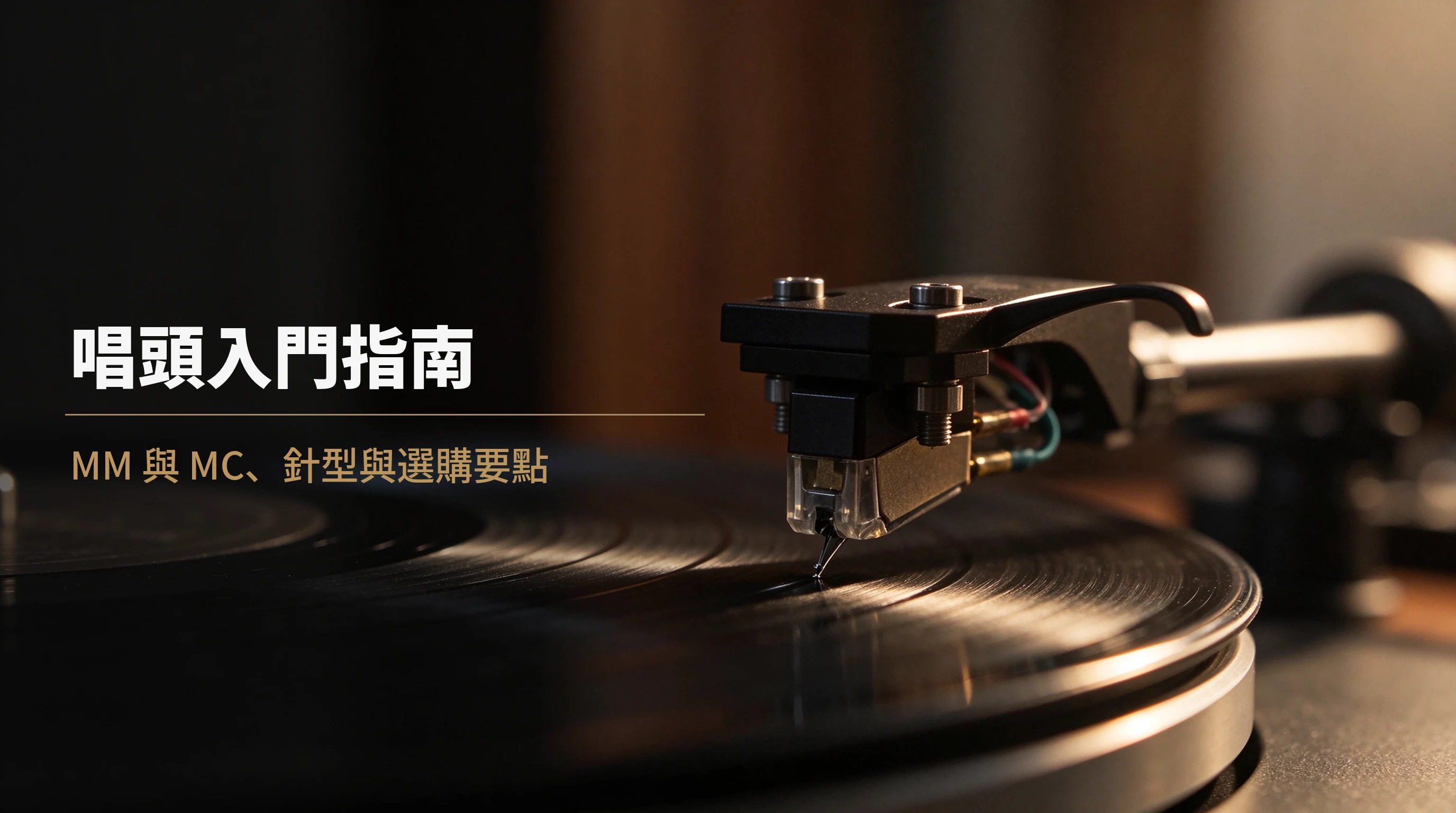
A phono cartridge is an electromagnetic transducer mounted at the end of the tonearm. As the stylus rides the record groove, its mechanical vibration is transferred to the magnets and coils inside the cartridge and converted into a weak electrical signal, which the phono stage then amplifies and equalises back to the RIAA curve. Because the cartridge touches the record directly, it often shapes timbre, detail and tracking more than the surrounding components.
If you are looking for a phono cartridge or want to understand how to choose and replace one, this guide walks through the principles, key specifications and matching steps in order.
Two Main Types: Moving Magnet vs Moving Coil
MM (Moving Magnet)
In a moving magnet cartridge, small magnets sit on the end of the cantilever and move within fixed coils. Because the coils can carry many turns, the output is relatively high, typically around 2.5–6 mV, and works straight into a standard MM/PHONO input on an amplifier or phono stage. The design is robust, and the stylus assembly is usually user-replaceable, which makes MM the most common choice for entry-level and everyday listening.
MC (Moving Coil)
In a moving coil cartridge, tiny coils are attached to the cantilever and move within a fixed magnetic field. The lighter moving mass usually brings a wider frequency response, better transients and finer low-level detail. Because the coils have few turns, the output is very low: low-output MCs are commonly around 0.2–0.5 mV, and require a higher-gain MC phono stage with adjustable loading, or a step-up transformer. MCs are precision devices, generally more expensive, and the stylus is usually retipped by the manufacturer or a specialist rather than replaced by the user.
- Output voltage: MM around 2.5–6 mV; MC around 0.2–0.5 mV (high-output MCs excepted).
- Phono stage needed: MM works with a standard PHONO input; MC needs MC gain and loading adjustment, or a step-up transformer.
- Moving mass: MC is lighter, with stronger detail and transients; MM is robust and easy to maintain.
- Replacement: Most MM styli are replaceable; MCs are typically returned for retipping.
- Best for: MM suits entry to mid-level setups with large record collections that value stability and simple upkeep; MC suits advanced listeners seeking resolution and detail.
How to Read the Key Specifications
Output Voltage
The signal produced at 1 kHz and 5 cm/sec. Output must match the phono stage gain: MM pairs with a standard MM input; a low-output MC connected to a plain MM input will sound noticeably quiet with a higher proportion of noise.
Tracking Force
The force pressing the stylus onto the record, in grams (g). Every cartridge has a recommended range and an optimal value. Too much force accelerates wear on both record and stylus; too little causes mistracking and skating. After fitting a cartridge, set the force with a scale and check vertical tracking angle (VTA) and azimuth.
Compliance and Tonearm Matching
Compliance describes the suspension's stiffness, in µm/mN. High-compliance cartridges usually pair with light tonearms; low-compliance cartridges suit heavier arms. A poor match produces a low-frequency resonance peak that sounds loose or uncontrolled. MC cartridges tend to be low-compliance, so confirm the arm's effective mass and force range are compatible before buying.
Frequency Response, Channel Balance and Separation
Frequency response shows the usable audio range and tolerance; smaller left-right channel balance differences are better; higher channel separation gives a clearer stereo image. These figures help compare models in the same class, but final judgement still comes from listening.
Internal Impedance and Loading (MC)
MC cartridges have very low internal impedance, and the load impedance of the phono stage or step-up transformer noticeably affects tonal warmth and high-frequency extension. Advanced listeners fine-tune the load to the cartridge; at entry level, a phono stage with an MC input or adjustable loading is sufficient.
Stylus Tip and Cantilever: The Core in the Groove
Stylus Shapes
- Spherical / Conical: The simplest rounded tip, contacting the centre of the groove wall. Durable and forgiving on worn secondhand records, with limited high-frequency resolution.
- Elliptical: A dual-radius shape with a smaller side radius that follows the groove wall more closely, improving high-frequency and phase accuracy over a spherical tip.
- Fine Line / Microlinear: A profile close to the cutting stylus used for the master disc, with finer contact, better high-frequency extension and lower distortion.
- Shibata: A larger contact area that retrieves ultra-high frequencies with lower groove stress and distortion; commonly found on mid-to-high-end cartridges.
Entry cartridges usually use a bonded diamond; mid-to-high-end models use a nude diamond, shaped from a single stone, for lower tip mass, more accurate tracking and more even wear.
Cantilever Material
The cantilever links the diamond to the drive assembly. Common materials include aluminium alloy (entry to mid-level), boron (light and stiff), and sapphire and diamond (top tier). The lighter and stiffer the material, the faster the vibration transfer and the lower the resonance.
Common Myths
Is MC always better than MM?
Not necessarily. MC has the potential for greater resolution and detail, but it needs a compatible arm, phono stage and well-controlled chassis resonance to realise it. If the rest of the system is not ready, an MM can sound more balanced and stable.
Does an expensive cartridge help on a basic turntable?
Cartridge upgrades are limited by the platter, arm rigidity and resonance of the turntable. Set up the deck and arm properly first, then step up the cartridge gradually within budget; a flagship MC on a light entry deck is rarely worthwhile.
Can you just replace the stylus?
Most MM cartridges allow a stylus assembly swap; MCs usually have no removable stylus and must be retipped by a specialist. Include future maintenance in your buying decision.
Are higher specification numbers always better?
Specifications compare models in the same class and type; no single figure decides the result. Tonal trade-offs still depend on your records, listening room and personal preference.
How to Choose: Match Your Existing System
- Check the phono stage: Does the amplifier or standalone stage have an MM input, or MC gain and loading adjustment?
- Check the tonearm: Effective mass, adjustable force range, and whether VTA and azimuth can be set.
- Assess the deck: Start with MM on a light entry deck; consider MC on a solid mid-to-high-level deck.
- Budget split: The cartridge typically takes about 20–30% of the vinyl system budget, balanced against deck and phono stage.
- Record types: For older, worn records, favour a forgiving stylus; for newer recordings, a fine line-contact or Shibata tip makes sense.
Further Reading
- Beginner's Guide to Choosing a Turntable
- Pro-Ject Turntable Buying Guide
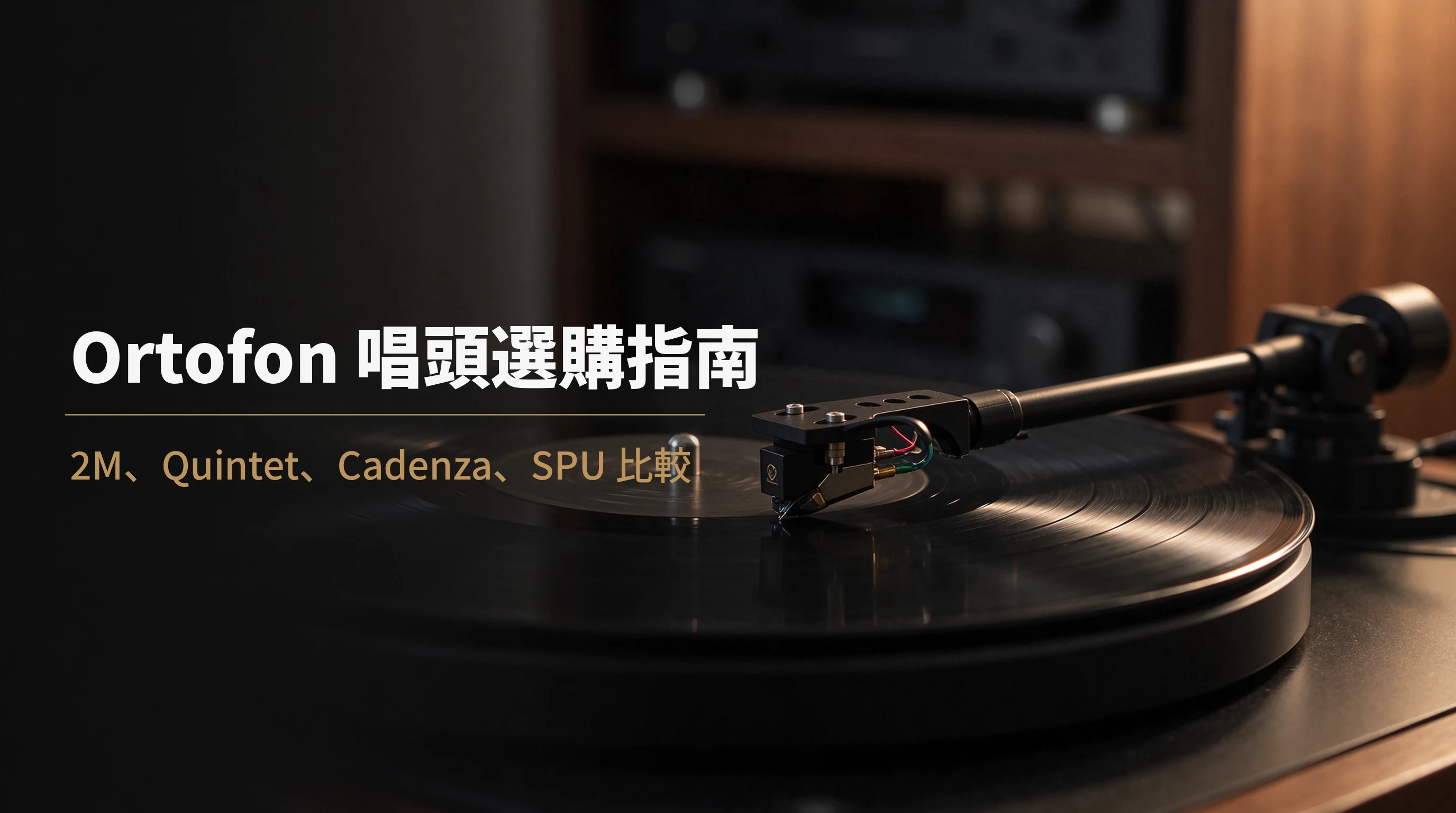
- For an MM start, see the Ortofon 2M Red; to gain more detail within MM, look at the 2M Blue.
Book an in-home audition to compare the timbre and tracking of different cartridges firsthand. Our specialist advisor will help you choose a cartridge that fits your turntable, tonearm, phono stage and listening preferences.