Buying Guides
What Is High-End Audio? Three Core Ideas for Beginners
Myth: high-end audio = expensive audio?
Many people assume high-end audio means stacking expensive gear. In reality, it's about less coloration, lower noise and fuller dynamics. On a clean system, the detail and space already in the recording emerge naturally — you don't need gear to "beautify" the music.
Idea 1: SNR determines background silence
System noise comes from three places: amplifier hiss, power pollution and digital jitter. A high-SNR DAC (above 100 dB), clean power and good grounding let the silence between notes go truly silent rather than hissing. Once the background goes black, detail emerges.
Idea 2: dynamic range drives realism
A symphony spans 80 dB from softest to loudest. Phone speakers and radios compress at high volume; a high-end system lets pianissimos stay delicate and fortissimos hit hard without distortion. That's why the same recording feels live on a better system.
Idea 3: accuracy matters more than "ear candy"
Cheap gear often boosts highs for "clarity" or bass for "impact". High-end systems aim for accuracy: piano sounds like piano, voice like voice, the rosin on strings feels real. Long sessions don't fatigue, because the gear isn't imposing its own flavor.
The three things beginners overlook
- Room and placement: when the room is the bottleneck, no component upgrade matters
- Power: Hong Kong mains is noisy; entry-level conditioning is the best-value upgrade
- Source quality: no gear rescues a 128 kbps MP3
Where to start?
Begin with speakers you've heard and like, pair them with an amp that can drive them, and start with a phone/computer plus an entry-level DAC. Don't chase a flagship component first — system balance beats any single-point extreme.
Book an audition
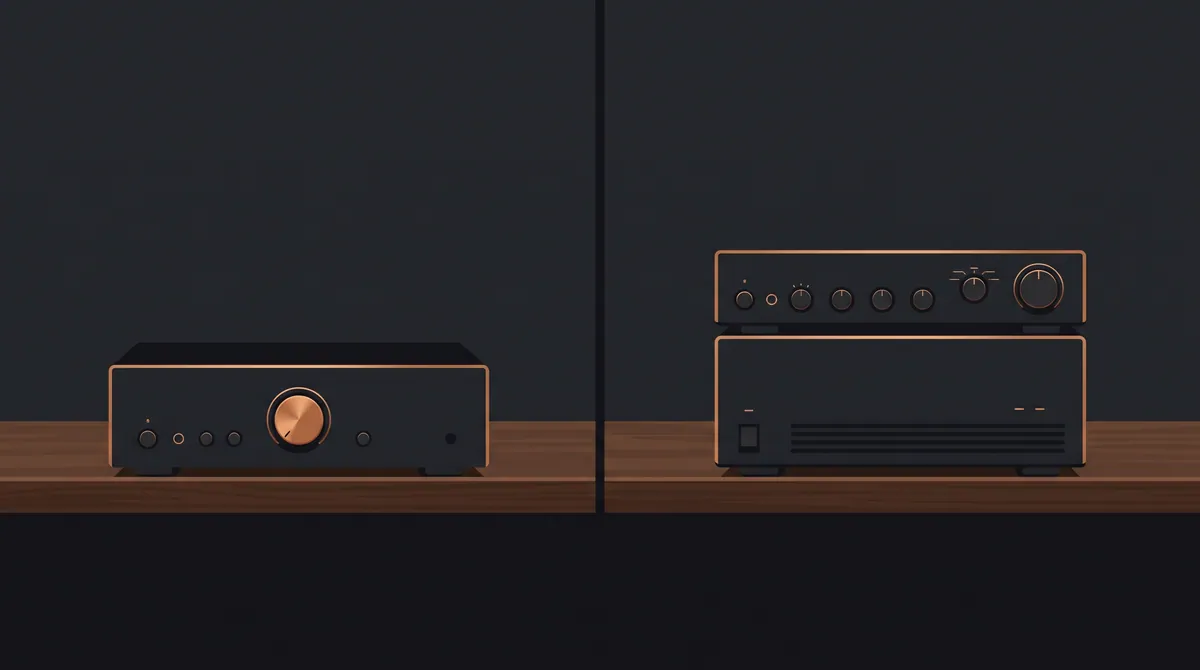
High-end audio is judged by ears, not spec sheets. Book an audition and compare two system levels in our listening room.