Buying Guides
Power and Impedance: How Much Amp Does Your Speaker Need?
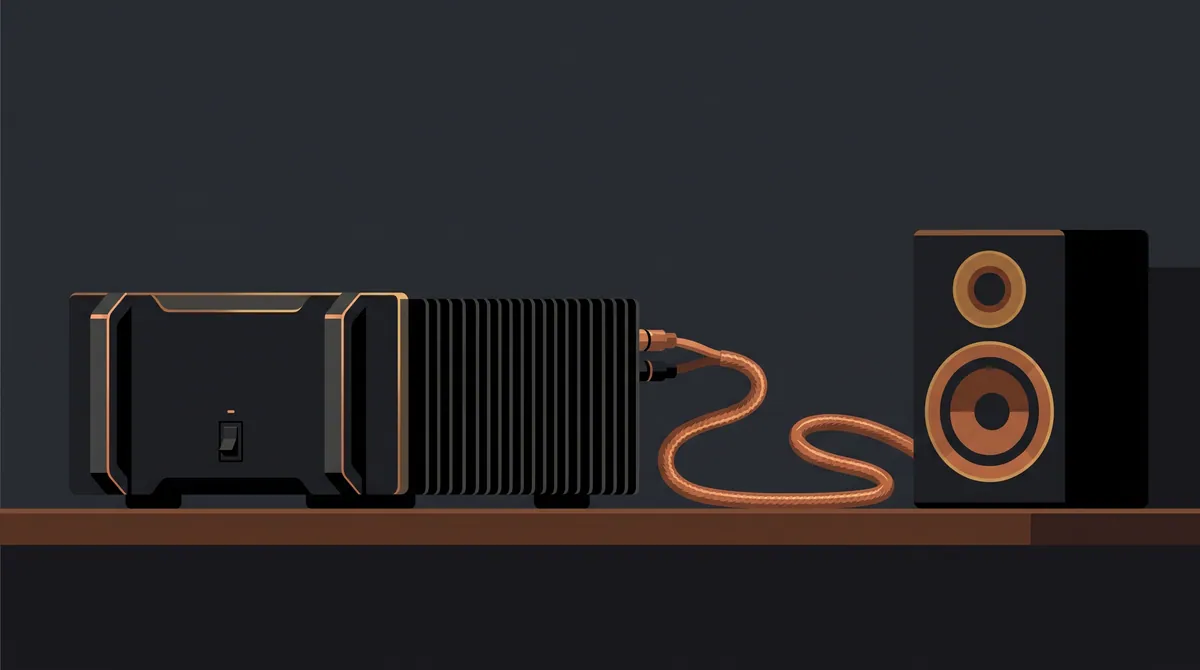
Why does a speaker need "enough" amplifier?
A cheap 50W amp and a high-quality 50W amp driving the same speaker can sound worlds apart. The difference isn't the wattage — it's output current, damping factor and power supply. The latter grips the driver through loud passages and bass; the former sounds loose.
Impedance: 4 Ω or 8 Ω?
Speaker impedance isn't fixed — it varies with frequency. Most speakers are rated 8 Ω but may dip to 6 Ω in the midrange and peak at 4 Ω in the bass. The amp must deliver stable current across this range. Cheap amps sag at low impedance and sound soft.
4 Ω speakers demand more current (double at the same voltage) but are often easier to drive. When choosing an amp, "stable into 4 Ω" matters more than total watts.
Sensitivity: the dB number that sets volume
An 86 dB speaker needs four times the power of a 90 dB one. High-sensitivity speakers (>90 dB) work with small solid-state amps; low-sensitivity ones need high-current power amps. In a small Hong Kong room, a 90 dB speaker is already loud at 10W.
Common myths
- "More watts sounds better" — false. Enough is enough; too much power can blow tweeters
- "Tube amps are low-powered but sufficient" — only with efficient speakers; low-sensitivity bookshelves need solid state
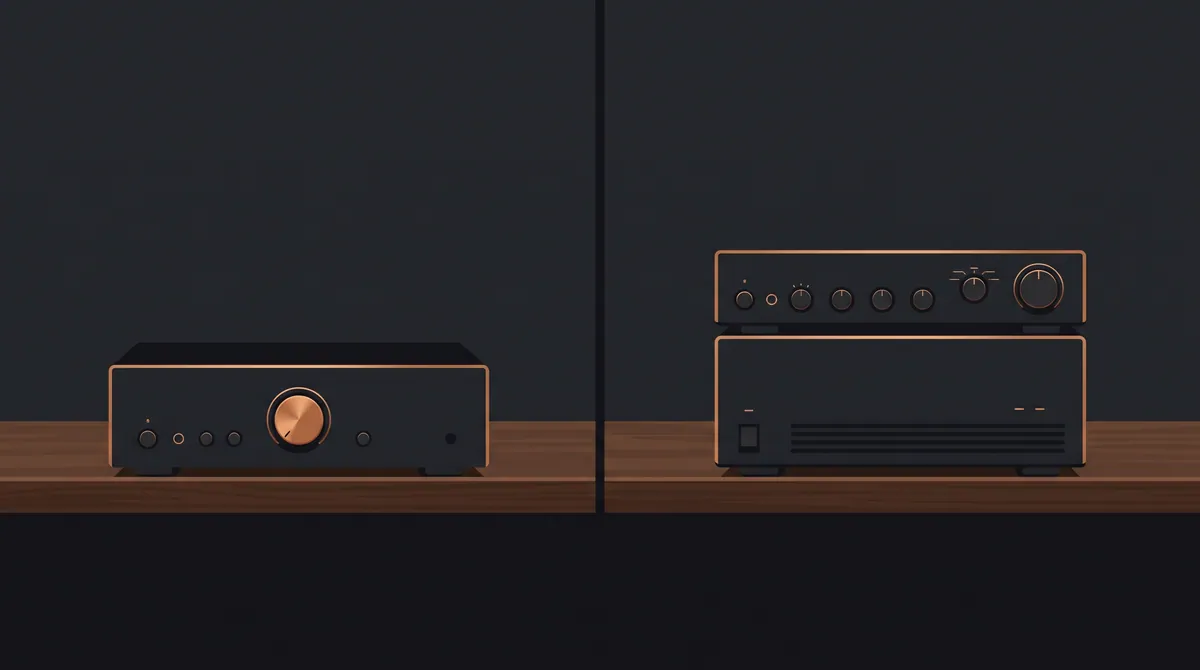
- "Monoblocks always beat integrateds" — false. A well-designed integrated is plenty in a small room
Current matters more than watts
Modern low-impedance speakers (4 Ω, even 2 Ω) need instantaneous current, not continuous wattage. Class D amps such as NuPrime deliver high current efficiently with low heat — a real advantage driving inefficient speakers in small rooms.
Damping factor: controlling bass
Damping factor is the inverse of output impedance. High damping (above 100) lets the amp stop the driver the instant the signal ends — bass stays tight. Low damping leaves a "tail" and sounds boomy.
How to match?
Tell us your speaker model and room size, and we'll recommend the right amp class and power. Don't shop by wattage alone — share what you own and we'll suggest a balanced match.