Buying Guides
Headphone Buying Guide: Open-Back, Closed-Back and IEMs
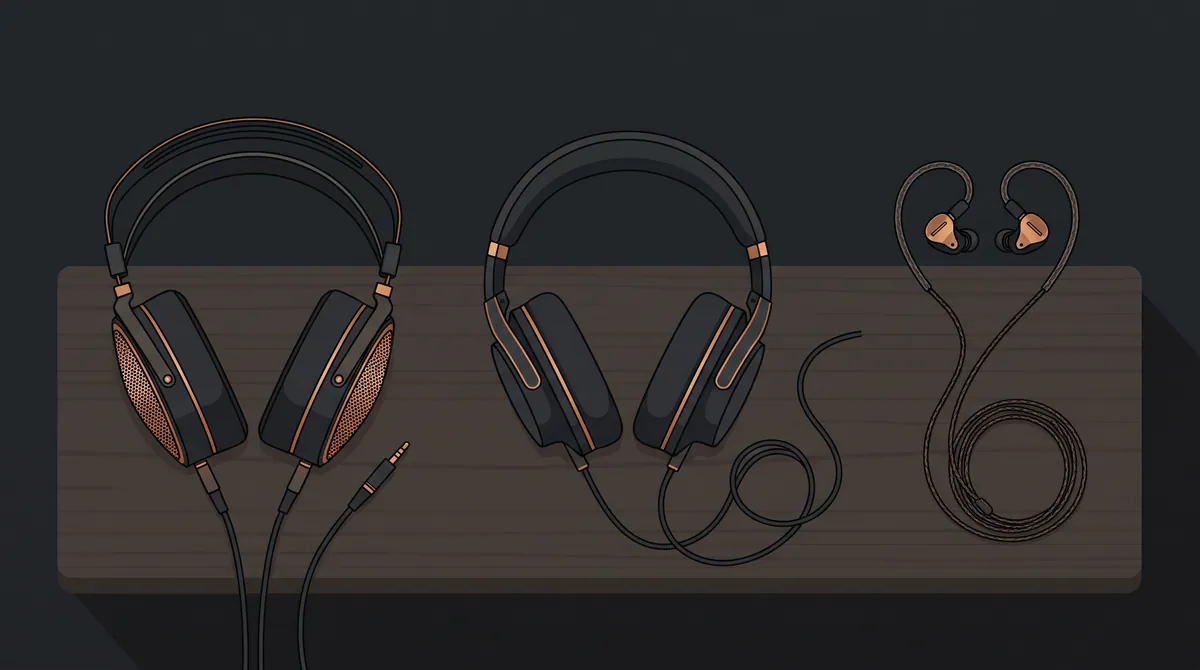
The three headphone categories at a glance
The first step is the listening scenario. Open-back headphones (such as the Sennheiser HD series) sound natural and spacious but leak sound — best for quiet home listening. Closed-back headphones isolate well and leak nothing — ideal for commuting and offices. In-ear monitors (IEMs, such as InEar) are tiny, highly isolating and portable for on-the-go use.
Open-back: the home listener's choice
Open-back headphones reproduce speakers' soundstage and natural tonal balance, and are less fatiguing over long sessions. The trade-off is less bass and external noise leakage. In a Hong Kong home where others won't be disturbed, open-back is the enthusiast's first choice. Impedances range 32–300 Ω; high-impedance models need an amp.
Closed-back: isolation and portability
Closed-back cups seal fully, passively blocking outside noise. The trade-off is a more enclosed sound and greater listener fatigue, with bass often emphasised. Ideal for commuting, flights and offices. Most closed-backs are low-impedance (16–80 Ω) and work from phones.
IEMs: stage and mobility
Custom IEMs from German brands such as InEar are tiny yet sonically dense, with 26–35 dB of passive isolation. They're fully personal, disturb no one and are the standard on stage for musicians. They require an ear impression, so initial cost is higher.
Buying checklist
- Scenario: home, commute or stage?
- Impedance and sensitivity: high impedance (250 Ω+) needs an amp; low impedance runs from a phone
- Cup material: velour breathes but gets dirty; leather isolates but gets hot
- Replaceable cable: lowers long-term cost for IEMs
- Fit: headphones are personal — long-session comfort beats specs
Do you need an amp?
High-impedance, low-sensitivity headphones (such as a 600 Ω HD 800S) require an amp — without one, sound is quiet and bass is loose. Low-impedance headphones work from a phone, but a portable amp still improves dynamics and control. If your DAC already has a headphone out, try it first before upgrading.
Are custom IEMs worth it?
InEar custom IEMs start with an ear impression and take 4–6 weeks. The benefit is a perfect fit, maximum isolation and zero long-session ear pressure. If you use headphones more than two hours a day, custom IEMs are a worthwhile long-term investment.
Book an audition
Headphones are personal — specs lie, ears don't. We offer a range of headphones for audition. Book a time, bring your source and favourite recordings, and compare in person.